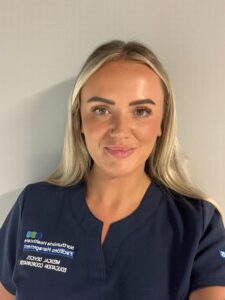
In conversation with Chloe Dunning, Medical Device Education Coordinator
 Can you tell us a bit about yourself?
My name is Chloe Dunning, and I’m a Medical Device Education Coordinator. I’ve been in this role for three years. My current work is quite different from my original background, as I previously worked as a Biomedical Scientist specialising in Clinical Biochemistry for around eight years. Alongside my role, I’ve completed a PGCE in Health Professions Education and I’m currently undertaking an MSc in Patient Safety and Quality Improvement.
Can you give us a brief overview of your career journey?
I began my career as a Biomedical Scientist in Clinical Biochemistry, where I developed a strong foundation in laboratory science and patient diagnostics. After around eight years, I decided to transition into education, driven by an interest in teaching and improving patient safety through staff training. This led me to my current role as a Medical Device Education Coordinator, where I’ve been able to combine my scientific background with my passion for education. Completing my PGCE and pursuing my MSc have further supported this shift.
What does a typical day look like?
A typical day can be very varied. It might include delivering training sessions on the safe use of medical gases, teaching on the Care Certificate Programme, or developing educational resources to support staff and improve patient safety. The variety keeps the role dynamic, and I often balance hands-on teaching with behind-the-scenes preparation and planning.
What is one thing you would like people to know about your role?
One thing I’d like people to know is how important education is in ensuring patient safety. Effective training on medical devices and procedures plays a crucial role in reducing risk and supporting staff to provide high-quality care.
What do you enjoy most?
I most enjoy delivering training sessions, as it gives me the opportunity to get out and about, meet different teams, and interact directly with staff. It’s rewarding to engage with people and see the impact that education can have in practice. I also find it particularly rewarding to see positive changes in practice following challenging incident reports, and to be part of identifying ways to improve patient care and outcomes.